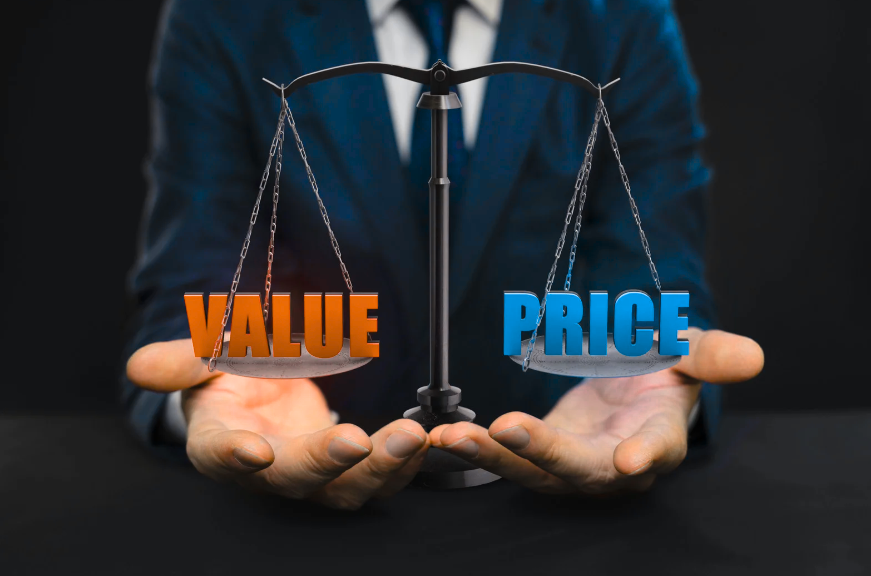
The missing link in Sales Transformation
“Price is what you pay. Value is what you get.”
– Warren Buffett
In today’s volatile business world, this quote has never been more relevant. Organizations across industries are talking about sales transformation and its new tools, better processes, digital CRMs, AI-powered analytics, and performance dashboards. Yet, many still struggle with the same old challenge: sales teams continue to compete primarily on price.
This over-reliance on discounts, deals, and price-cutting might secure short-term wins, but it rarely builds long-term relationships or sustainable revenue. The truth is simple: no sales transformation is complete until an organization shifts from price-selling to value-selling. That is the missing link.
Why Price-Selling Persists
Price-selling is attractive because it feels quick and tangible. A client pushes back, and the immediate reflex is: “Let’s cut the price.”
Several factors fuel this behavior:
- Pressure to close deals fast: Quarterly targets often drive reactive discounting.
- Customer conditioning: Buyers are trained to ask for lower rates because sellers give in easily.
- Skill gaps in sales teams: Many sellers struggle to articulate business impact, so they fall back on numbers.
- Short-term mindset: Leaders often reward immediate revenue, even if margins shrink.
The outcome? Shrinking profits, commoditization of offerings, and fragile customer loyalty. Competitors can always offer a lower price. What they cannot easily copy is the value you bring.
The hidden costs of Price-Selling
While lowering prices seems like a harmless negotiation tactic, the ripple effects are significant:
- Eroded Margins – every discount eats into profit, leaving less room for reinvestment.
- Damaged Brand Perception – customers start to see your solution as a commodity.
- Unhealthy Sales Culture – reps become conditioned to “buy deals” with discounts instead of earning them.
- Low Customer Loyalty – if the relationship is built on price, it will break on price.
In other words, price-selling creates a treadmill of deals that are hard to sustain and even harder to grow.
What Value-Selling really means
Value-selling is not just about “talking benefits”, It goes deeper. At its core, value-selling is about understanding the customer’s business drivers and aligning your solution with measurable outcomes.
It means moving from:
- Selling products → to solving problems
- Talking about cost → to talking about ROI
- Chasing transactions → to building partnerships
- Pushing features → to enabling business outcomes
A salesperson practicing value-selling is not asking: “How do I close this deal fastest?” Instead, they are asking: “How will my solution change the customer’s business in a way that matters to them?”
This subtle but powerful shift transforms conversations, relationships, and ultimately, revenue.
Why it is the missing link in Sales Transformation
Organizations often invest heavily in sales transformation. New CRMs, training programs, sales dashboards, AI-driven insights. While these are useful, they are tools, not mindsets.
Without a cultural and behavioural shift to value-selling, all these investments risk becoming surface-level improvements.
Here’s why value-selling is the missing link:
- Technology without mindset is incomplete – CRMs can track numbers, but they can’t shift conversations from discount to value.
- Processes without belief don’t stick – Unless leaders reward value creation, salespeople will default back to price.
- Customer-centricity demands it – Buyers do not care about your internal systems; they care about the business impact you deliver.
A sales transformation that ignores value-selling is like upgrading a car’s dashboard while ignoring the engine. It looks modern but doesn’t drive better.
How to enable the shift: Practical steps
Shifting from price to value-selling is not an overnight change. It requires deliberate effort across leadership, training, and culture. Here are five practical steps:
-
Redefine sales success metrics
Stop rewarding only revenue numbers. Recognize and reward reps who demonstrate value-based conversations, account growth, and customer advocacy.
-
Invest in Business Acumen training
Salespeople must speak the language of ROI, efficiency, and growth not just product features. Equip them to understand client industries, financial drivers, and strategic challenges.
-
Align Leadership and Sales Managers
Leaders set the tone. If managers push for quick wins at any cost, value-selling will never stick. Coaching conversations must reinforce long-term client impact.
-
Build Sales Playbooks around Value
Provide frameworks, case studies, and success stories that show how your offerings deliver measurable outcomes. These should become reference points in every sales pitch.
-
Create a culture of curiosity
Encourage salespeople to ask better questions: What’s your biggest risk right now? How does this problem affect your growth? What’s the cost of inaction? Genuine curiosity uncovers value.
Case:
A global manufacturing client we worked with faced a challenge: their sales team was giving heavy discounts to win contracts in a highly competitive market. Despite healthy order books, margins were shrinking.
Through a structured sales enablement program focused on value-selling, we trained their team to link solutions directly to clients’ productivity gains and cost savings.
Within six months:
- Discounting reduced by 22%
- Average deal size grew by 18%
- Client retention improved noticeably
The transformation was not in the CRM system or pricing policy. It was in the conversations salespeople had with clients.
Reflective questions for Leaders
- Are your sales teams rewarded for revenue alone, or for building value-based client relationships?
- Do your salespeople know how your solution impacts your clients’ business outcomes in measurable terms?
- When customers push for discounts, do your teams know how to pivot the conversation toward value?
If your honest answer to these is “not always,” you may be missing the critical link in your sales transformation journey.
Winning Beyond Price
In competitive markets, price will always be a factor. But if price is the only differentiator, you are in a race to the bottom.
True sales transformation is not about selling cheaper, faster, or louder. It is about selling smarter, anchoring every conversation in the value you deliver.
At Groval Eulers, we believe this is where sustainable growth is built: when organizations move from chasing price-sensitive deals to creating value-driven partnerships.
So, the question is not just “How do we transform sales?”
The real question is: “How do we enable our teams to sell value, not price?”
Because when salespeople stop competing on discounts and start competing on value, transformation is not just a buzzword, It becomes a lived reality.
Ready to transform your Sales Approach?
If your teams are still caught in the trap of price-selling, it is time to shift gears.
Groval Eulers helps organisations build value-selling cultures, enable sales leaders, and create sustainable growth strategies.
Reach out to us at: [email protected]
Let’s discuss how we can help your organisation move from price-driven deals to value-driven partnerships.
Explore More Insights
Here are some related blogs you may find useful:
- https://grovaleulers.com/consultative-selling-vs-product-pitching-what-every-b2b-sales-team-must-master/
- https://grovaleulers.com/5-timeless-fundamentals-of-the-consultative-sales-approach/
- https://grovaleulers.com/the-importance-of-building-a-culture-of-account-management-in-an-organisation/
- https://grovaleulers.com/how-to-handle-attrition-in-sales-teams/
