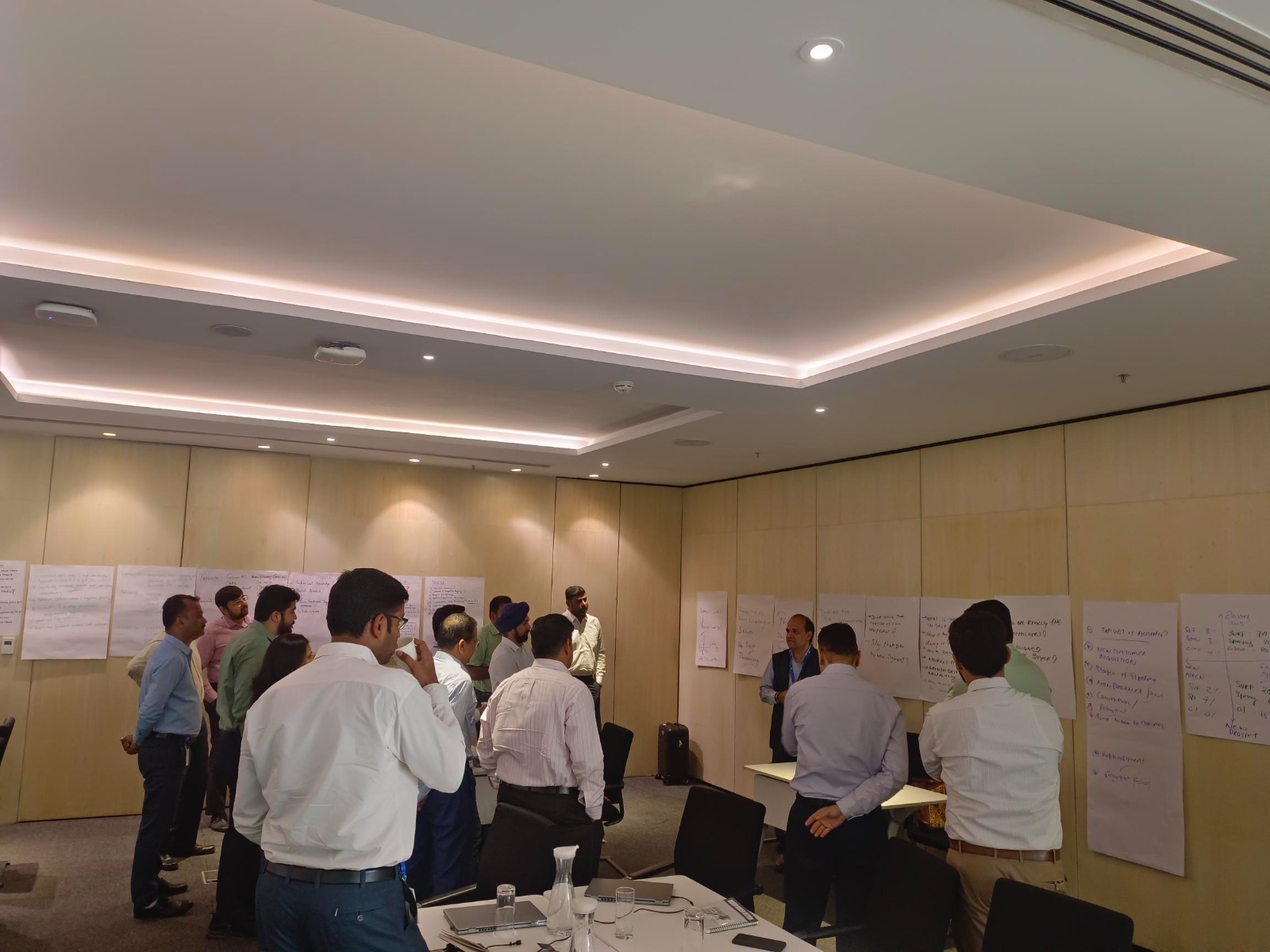
From Selling to Leading
“The day you become a sales manager, your biggest achievement is no longer the deal you close, it is the confidence you build in someone else.”
Promotion is one of those moments that every sales professional remembers. It represents trust, recognition, and the belief that years of consistent performance deserve a larger responsibility. For many organisations, promoting their best salesperson into a managerial role feels like the most natural decision. After all, who better to guide a sales team than someone who has repeatedly demonstrated how to win customers and achieve targets?
Promotion also brings an important reality into focus.
Does great selling naturally create great sales leaders?
Over the years, that has become one of the most fascinating leadership conversations I have had with business owners, sales heads, and newly promoted managers. The answer rarely depends on technical knowledge or selling ability. It depends on whether the individual is willing to redefine what success means.
That is precisely why sales leadership training for first-time managers has become an important leadership priority for organisations that want sustainable sales performance rather than occasional success.
When your definition of success begins to change?
The shift from salesperson to manager is rarely dramatic. It happens quietly, often without anyone noticing.
One day you celebrate a large order. A few weeks later, you find yourself reviewing someone else’s pipeline instead of your own. Customer meetings are still part of your calendar, but so are one-to-one discussions, forecast reviews, coaching conversations, hiring decisions, and performance discussions. The work looks familiar at first glance, yet the purpose behind every activity has changed.
Many first-time managers continue to measure themselves by the standards that made them successful earlier. They feel satisfied after closing a difficult deal, negotiating a complex contract, or resolving a customer escalation. Those achievements certainly matter. But leadership gradually asks a different question.
Who else became better because you were involved?
From that point onward, the manager begins to see the role differently.
A salesperson creates revenue through personal effort. A sales leader creates an environment where many people are capable of creating revenue consistently. The shift is subtle, but it influences every conversation, every review meeting, and every decision a manager makes.
Why experience alone does not create leadership?
One conversation from a coaching session has stayed with me for years.
A newly promoted sales manager proudly shared that he had attended almost every important customer meeting during the previous month. His customers appreciated the support, difficult negotiations had progressed well, and the sales team felt reassured knowing their manager was available whenever a major opportunity appeared.
On the surface, everything seemed positive.
I asked him one more question.
“How many of those meetings could your team have handled confidently without you?”
The room became quiet for a moment. Not because the answer was uncomfortable, but because it revealed something that had remained invisible until then.
His involvement had strengthened the deals, but it had not necessarily strengthened the people handling them.
This is one of the most important leadership journey, organisations often underestimate. Experience is valuable, but leadership is not measured by how frequently a manager joins customer conversations. It is measured by how confidently the team conducts those conversations when the manager is not present.
Sales leadership training for first-time managers should therefore focus less on transferring knowledge and more on helping managers recognise when to guide, when to observe, and when to step back. That judgement cannot be learned from a presentation alone. It develops through reflection, coaching, and consistent practice.
Coaching is not another management activity. It is the work.
Many new managers tell me that they simply do not have enough time to coach. Their calendars are full of one-to-one discussions, internal reviews, approvals, forecasts, and operational discussions. Coaching often becomes something they intend to do once the pressure reduces.
What changes in high-performing sales organisations is not the workload but the manager’s understanding of where long-term value is created.
Closing a deal creates immediate business. Coaching someone to close the next ten deals independently creates something much larger.
Coaching should never be viewed as an additional responsibility. It is one of the primary responsibilities of a sales leader.
I have often observed that the quality of a manager’s questions determines the quality of a salesperson’s thinking. Managers who immediately provide answers solve today’s problem. Managers who ask thoughtful questions help their teams solve tomorrow’s problems without depending on constant supervision.
A simple change in conversation can make a remarkable difference.
Instead of asking, “When will this deal close?”, a manager might ask, “What have we understood about the customer’s business that our competitors may have missed?”
One question updates the forecast.
Review meetings reveal the kind of leader you are becoming
Sales review meetings are among the most underestimated leadership opportunities in any organisation.
On paper, they exist to discuss numbers – pipeline movement, forecasts, opportunities, review meetings, and revenue. In reality, they reveal something much deeper. They show what a manager chooses to pay attention to.
Some managers review activities. Others review thinking.
The difference becomes evident within the first few questions.
“How many meetings did you complete?”
“What is the expected closure date?”
“Has the proposal been shared?”
These questions certainly have their place. Every sales organisation needs discipline and visibility. But when every review revolves only around activities, salespeople gradually learn that reporting is more important than learning.
Over the years, I have found that the most productive review meetings are rarely the longest ones. They are the ones that leave people thinking differently about the next customer conversation.
Instead of asking whether an opportunity will close this month, an experienced sales leader might ask, “What changed in the customer’s business after your last meeting?” Instead of discussing price immediately, they may ask, “What value has the customer recognised so far?”
The discussion shifts from reporting information to improving judgement.
That is where capability begins to grow.
Leadership is built in everyday conversations, not annual workshops
Many organisations invest in sales leadership training for first-time managers with genuine intent. The workshop generates energy, managers leave with notebooks full of ideas, and everyone returns to work with renewed enthusiasm.
The real work, however, begins on Monday morning.
Leadership does not become a habit because someone attended a programme. It becomes a habit because certain conversations begin to happen repeatedly.
A manager who consistently asks thoughtful questions during pipeline reviews, spends time preparing salespeople before important customer meetings, and reflects on both successful and unsuccessful opportunities is quietly shaping the culture of the team.
Culture rarely changes through announcements.
It changes through repetition.
The conversations managers choose to have every week eventually become the behaviours their teams begin to value every day.
That is why leadership development should never be viewed as a one-time intervention. It is a continuous process of helping managers notice patterns, strengthen judgement, and build ownership in others.
The best sales leaders gradually make themselves less indispensable
This idea often surprises first-time managers.
In the early months, many believe they are adding value by becoming involved in every important customer interaction. Their experience is valuable, and naturally the team seeks their support.
Over time, however, effective leaders begin asking a different question.
“How can I prepare my team so they no longer need me in this conversation?”
That question changes the way managers coach, delegate, and review performance.
It also creates something every organisation hopes to achieve but rarely discusses openly – a team that performs consistently rather than depending on a few exceptional individuals.
One observation has remained remarkably consistent across organisations.
Sales teams become stronger when managers stop trying to be the hero of every deal and start becoming the architect of the team’s capability.
The satisfaction also changes. Instead of celebrating the deals they personally influenced, managers begin taking pride in watching a salesperson confidently handle a complex negotiation, lead a strategic customer discussion, or recover a difficult opportunity through their own judgement.
That is leadership in its most practical form.
The organisations that invest early often benefit for years
The first manager in a salesperson’s career leaves a lasting impression.
Good managers shape independent thinking. Great managers shape future leaders.
When organisations invest in sales leadership training for first-time managers, they are doing much more than preparing individuals for a promotion. They are establishing the behaviours that will influence learning discussions, customer relationships, review meetings, and sales culture for years to come.
The impact extends well beyond quarterly numbers.
Managers who learn how to coach rather than direct create salespeople who think independently. Teams become more willing to share ideas, discuss difficult customer situations, and learn from both successful and unsuccessful opportunities. Accountability feels more natural because it is supported by trust rather than constant supervision.
Perhaps that is why some organisations consistently develop capable sales leaders from within while others remain dependent on a few high performers.
The difference often lies in how intentionally they prepare people for their very first leadership role.
A few questions worth reflecting on:
If you are leading a sales team or preparing someone for their first managerial role, these questions are worth considering.
- When was the last time a review meeting improved a salesperson’s thinking rather than simply updating the pipeline?
- Are first-time managers spending more time coaching people or solving problems on their behalf?
- Do salespeople become more confident after customer meetings, or more dependent on managerial involvement?
- What behaviours does your organisation consistently recognise and reward after someone becomes a manager?
- If one of your sales managers were unavailable for a month, would the team’s capability continue to grow?
Sometimes the answers to these questions reveal more about a sales culture than the monthly dashboard ever can.
Final Thoughts
The transition from selling to leading is one of the most significant shifts in a sales professional’s career. It asks people to move beyond personal achievement and discover the satisfaction of helping others succeed. That transformation rarely happens on its own. It grows through thoughtful coaching, consistent practice, meaningful review conversations, and a culture that encourages continuous learning.
One idea has stayed with me through years of working with sales teams:
A salesperson creates revenue. A sales leader creates people who create revenue.
That is the real measure of leadership.
Customers may remember a great salesperson for an exceptional conversation. Organisations, however, remember the leaders who helped ordinary salespeople become extraordinary professionals. Sustainable sales performance is rarely built by creating a few star performers. It is built by developing leaders who make excellence possible across the entire team.
At Groval Euler’s, this is a conversation we continue to have with leadership teams across industries. Organisations that invest early in preparing first-time sales managers don’t just strengthen leadership capability – they create stronger sales cultures, more confident teams, and sustainable business growth.
Perhaps every promotion deserves more than a new designation. Perhaps it deserves the right preparation to help someone become the kind of leader others will one day remember.
